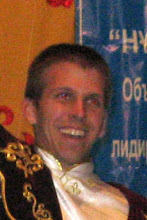
Oh yeah, I forgot to say it in my holiday post. Merry Christmas to all
my friends, family, and readers of thisblog!
Wednesday, December 24, 2008


Merry Christmas
Oh yeah, I forgot to say it in my holiday post. Merry Christmas to all
my friends, family, and readers of my blog!
my friends, family, and readers of my blog!
Monday, December 22, 2008
Christmas?
I don’t think you can really appreciate what Christmas means in America until you spend the holiday season in a country that has no concept of the holiday. It’s now December 22 in Kazakhstan, and it feels like any other time of year. There are no lights on houses. No Salvation Army volunteers ringing bells for donations. No ABC Family movies about someone finding the true spirit of the season. There’s the Christmas music I play at work, a Santa Claus wreath I bought last week hanging in our foyer, and the thought of celebrating somehow this week.
In a way that almost makes it worse, New Year’s here is kind of like Christmas. They have a Santa Claus (Ded Moroz (Father Snow)) that gives presents to children. They put up yolka (New Year’s trees) with ornaments on them. They give small presents. They have friends and family over. But Christmas? It is not Christmas. So when I explain Christmas, I can’t begin to capture what it really means. The complex religious and secular struggle that occurs every year that ultimately results in a spirit of giving and charity whether its for the right or wrong reasons. I don’t know how to express that yet in Russian, and even if I ever learn, I don’t think people can really understand how much it permeates the culture of America. For them, they hear Santa Claus, trees, gifts. Oh, like New Year’s. And that’s their association.
But when you aren’t there, you realize what Christmas is. It’s an industry. From Thanksgiving until December 25, America focuses on Christmas. The outward appearance of houses changes for weeks. Stores decorate. Commercials incorporate holiday images. Store displays have to have red and green. Churches schedule events and nativity scenes. Charitable giving increases. There are holiday parties for the office, for the schools, and for the needy. Hundreds of songs are written, records are produced, and radio stations change their entire programming. Some (maybe most) of it is commercial, just another part of American marketing taking an idea and milking it for capitalist greed. But despite that, the “spirit” of Christmas is hard to avoid. The idea that this is a special time of year for giving and family and thinking of others. And this season lasts almost a full month. That’s about 8% of the year. Which is really a long time if you think about it.
And really, I think it’s great. And I miss it. I’ll probably buy a New Year’s tree tomorrow. Decorate it Christmas Eve with my host family and give some presents to my host-niece Toma. And it’ll be great to share “Christmas.” And I’m sure they’ll love sharing in this American tradition in a novel sort of way. But they won’t understand. They can’t understand.
They say that living in a new culture often teaches you as much about your own as it does about the one you are exposed to. And I’m definitely beginning to believe that’s true. I can’t help but think of that ridiculous song about African children knowing whether or not it’s Christmas. They probably don’t. And Christmas there wouldn’t mean what Christmas mean in America. It’s gone beyond religious and secular; it’s something that’s cultural. And while it can be easy to share culture, it’s a hard thing for others to really understand.
In a way that almost makes it worse, New Year’s here is kind of like Christmas. They have a Santa Claus (Ded Moroz (Father Snow)) that gives presents to children. They put up yolka (New Year’s trees) with ornaments on them. They give small presents. They have friends and family over. But Christmas? It is not Christmas. So when I explain Christmas, I can’t begin to capture what it really means. The complex religious and secular struggle that occurs every year that ultimately results in a spirit of giving and charity whether its for the right or wrong reasons. I don’t know how to express that yet in Russian, and even if I ever learn, I don’t think people can really understand how much it permeates the culture of America. For them, they hear Santa Claus, trees, gifts. Oh, like New Year’s. And that’s their association.
But when you aren’t there, you realize what Christmas is. It’s an industry. From Thanksgiving until December 25, America focuses on Christmas. The outward appearance of houses changes for weeks. Stores decorate. Commercials incorporate holiday images. Store displays have to have red and green. Churches schedule events and nativity scenes. Charitable giving increases. There are holiday parties for the office, for the schools, and for the needy. Hundreds of songs are written, records are produced, and radio stations change their entire programming. Some (maybe most) of it is commercial, just another part of American marketing taking an idea and milking it for capitalist greed. But despite that, the “spirit” of Christmas is hard to avoid. The idea that this is a special time of year for giving and family and thinking of others. And this season lasts almost a full month. That’s about 8% of the year. Which is really a long time if you think about it.
And really, I think it’s great. And I miss it. I’ll probably buy a New Year’s tree tomorrow. Decorate it Christmas Eve with my host family and give some presents to my host-niece Toma. And it’ll be great to share “Christmas.” And I’m sure they’ll love sharing in this American tradition in a novel sort of way. But they won’t understand. They can’t understand.
They say that living in a new culture often teaches you as much about your own as it does about the one you are exposed to. And I’m definitely beginning to believe that’s true. I can’t help but think of that ridiculous song about African children knowing whether or not it’s Christmas. They probably don’t. And Christmas there wouldn’t mean what Christmas mean in America. It’s gone beyond religious and secular; it’s something that’s cultural. And while it can be easy to share culture, it’s a hard thing for others to really understand.
Sunday, December 14, 2008
One of the most popular questions for people who are applying for the Peace Corps is the well what are you going to do. I used to joke that I wouldn’t know until I was in country for a year. But then I would tell them whatever information I knew at the time. It evolved from helping an organization, to helping an organization in Kazakhstan develop vague skills, to working in my current town at the organization Mynbulak. Well, my first answer was probably the most accurate. Four weeks at site, and I still have no idea what I’m doing here.
See my organization was a great organization a few years ago. It won grants, did projects, had an office, etc. However, then the people who worked at it moved to a new city. Organization put on hold. The people who had worked there heard about Peace Corps though and had some experience working with a volunteer in another town. So they applied for a volunteer at their old organization, and they got one. Namely me. Problem is, that’s it. Me. I was working sami (by myself), and the whole point of the Peace Corps is to collaborate with local people. So Peace Corps said that had to change.
So now I am at the business center in the town’s city hall. I am supposed to help write business plans and develop small business in the region. It sounds like a good overall plan, but I am not really sure how it will all work. My current impression is that the business center does not do such projects, and it may be me once again doing projects all by my lonesome. I’ve only been here three days, so there’s still a lot of information to learn. Hopefully, I will have some sort of good work plan established by the New Year though.
See my organization was a great organization a few years ago. It won grants, did projects, had an office, etc. However, then the people who worked at it moved to a new city. Organization put on hold. The people who had worked there heard about Peace Corps though and had some experience working with a volunteer in another town. So they applied for a volunteer at their old organization, and they got one. Namely me. Problem is, that’s it. Me. I was working sami (by myself), and the whole point of the Peace Corps is to collaborate with local people. So Peace Corps said that had to change.
So now I am at the business center in the town’s city hall. I am supposed to help write business plans and develop small business in the region. It sounds like a good overall plan, but I am not really sure how it will all work. My current impression is that the business center does not do such projects, and it may be me once again doing projects all by my lonesome. I’ve only been here three days, so there’s still a lot of information to learn. Hopefully, I will have some sort of good work plan established by the New Year though.
Tuesday, December 2, 2008
Turkey Day
Thanksgiving is my favorite holiday back in the States. And being so far away from it this year allowed me to reflect on why that is. I realized it’s just so simply celebrated. There are no costumes, no gifts, no cards, and little decorations. Just friends, family, and food. (One of the volunteers pointed out that I must not be preparing the Thanksgiving dinner if I think it is simply celebrated. Point taken, but still, there’s a simple nature to how you celebrate it).
This was the first time I was away from my family on Thanksgiving. The day itself came and went rather unceremoniously, but I did celebrate in a number of small ways. One. I printed out little cards in Russian saying that today was a holiday in America and I was thankful for all of the hospitality I had received in Kazakhstan. I gave out small pieces of candy with this note, possibly forever confusing Halloween and Thanksgiving in the minds of dozens of Kazakhstanis. Two. I smsed Thanksgiving notes to other volunteers with text from someecards.com, which is how I celebrate holidays back home. Three. I made mashed potatoes, with lard substituted for butter (making me realize what that distinctive taste in all of their food finally is).
However, for me the real holiday was celebrated on Saturday. And it was awesome! Six of us PCVs gathered in Taraz to put on a Thanksgiving to remember for ourselves and about a dozen locals. Dave managed to buy, kill, and clean about a ten pound turkey. Susanna cooked apple and pumpkin pie, as well as took care of cooking the turkey and the stuffing. Jenny made some glazed carrots and whole grain mac and cheese. Matt cooked some amazing fish cakes and corn bread muffins. Jamie covered the mashed potatoes, tomato and cucumber salad, brownies, and pumpkin bread. I made a Hotard casserole and sweet tea. Each of us spent time over the hot stove and used the oven in shifts to get everything ready.
Seems pretty authentic, right? Well, we were missing football. Until Jamie remembered she had the Fiesta Bowl game between Oklahoma and Boise State saved on her computer. Not just a football game, but maybe one of the greatest football games ever played. The game finished as the guests were arriving, which allowed ten locals to watch me freak out over a game I had already seen. Part of the emotion was real, and part of it was trying to recreate what I had felt that first time watching the game. I wanted to expose them to what watching football was like in America. Not a single one of them had any real idea what was going on, nor why the hook and ladder play was just ridiculous. They did understand the proposal at teh
After the game ended, we finally got around to eating our feast. Amazingly it really felt like Thanksgiving. The food, the football, the friends. And everything was really good. There honestly wasn’t a weak dish among the bunch. Apparently, we have some good cooks down here in the Zhambyl Oblast.
In order to spice up the post-eating party, we decided to play a few rounds of Bear, Ninja, Cowboy. Except someone wanted to make the game more seasonal, so we played Bear, Cowboy, Indian. It’s a variation on Rock, Paper, Scissors in which full body motions and sound effects are required. Then finally, pie was eaten, food was gone, and the guests all went home. And we were left there with tons of dishes and the immense satisfaction of having done Thanksgiving right. It felt great.
This was the first time I was away from my family on Thanksgiving. The day itself came and went rather unceremoniously, but I did celebrate in a number of small ways. One. I printed out little cards in Russian saying that today was a holiday in America and I was thankful for all of the hospitality I had received in Kazakhstan. I gave out small pieces of candy with this note, possibly forever confusing Halloween and Thanksgiving in the minds of dozens of Kazakhstanis. Two. I smsed Thanksgiving notes to other volunteers with text from someecards.com, which is how I celebrate holidays back home. Three. I made mashed potatoes, with lard substituted for butter (making me realize what that distinctive taste in all of their food finally is).
However, for me the real holiday was celebrated on Saturday. And it was awesome! Six of us PCVs gathered in Taraz to put on a Thanksgiving to remember for ourselves and about a dozen locals. Dave managed to buy, kill, and clean about a ten pound turkey. Susanna cooked apple and pumpkin pie, as well as took care of cooking the turkey and the stuffing. Jenny made some glazed carrots and whole grain mac and cheese. Matt cooked some amazing fish cakes and corn bread muffins. Jamie covered the mashed potatoes, tomato and cucumber salad, brownies, and pumpkin bread. I made a Hotard casserole and sweet tea. Each of us spent time over the hot stove and used the oven in shifts to get everything ready.
Seems pretty authentic, right? Well, we were missing football. Until Jamie remembered she had the Fiesta Bowl game between Oklahoma and Boise State saved on her computer. Not just a football game, but maybe one of the greatest football games ever played. The game finished as the guests were arriving, which allowed ten locals to watch me freak out over a game I had already seen. Part of the emotion was real, and part of it was trying to recreate what I had felt that first time watching the game. I wanted to expose them to what watching football was like in America. Not a single one of them had any real idea what was going on, nor why the hook and ladder play was just ridiculous. They did understand the proposal at teh
After the game ended, we finally got around to eating our feast. Amazingly it really felt like Thanksgiving. The food, the football, the friends. And everything was really good. There honestly wasn’t a weak dish among the bunch. Apparently, we have some good cooks down here in the Zhambyl Oblast.
In order to spice up the post-eating party, we decided to play a few rounds of Bear, Ninja, Cowboy. Except someone wanted to make the game more seasonal, so we played Bear, Cowboy, Indian. It’s a variation on Rock, Paper, Scissors in which full body motions and sound effects are required. Then finally, pie was eaten, food was gone, and the guests all went home. And we were left there with tons of dishes and the immense satisfaction of having done Thanksgiving right. It felt great.
Sunday, November 23, 2008
Carpooling with strangers
When you travel to most foreign countries, one of the first rules you learn is DON’T TAKE UNMARKED TAXIS. Just imagine in the United States, if someone pulled up next to you on a curb and offered to give you a ride. You don’t know who they are; they don’t know who you are. You might be a bit sketched out. In fact just last month, Peace Corps sent out a worldwide email about safety in cabs and had this as one of the precautionary measures.
However, one of the first things you learn in (Southern) Kazakhstan, is that this rule need not apply. In some cities, the only taxis available are these “Gypsy Cabs.” (I’m personally not a big fan of the name Gypsy Cab, but that’s what they call it. I think the Roma people get a bad rap too often.) Gypsy Cabs can be anyone that has a car. Sometimes people work as a Gypsy Cab driver to make a living, but other times it is just someone that is driving somewhere and wants to pick up a few extra tenge for benzene.
I think all of us trainees were a little uneasy with this idea when we first heard about it. From young children, we learn not to get into cars with strangers. And from going to South America, I learned anyone that is not a taxi driver who offers to drive me somewhere really just wants to kidnap me and steal all my money. Or kill me. Do something bad at least. But nope, down here in Southern Kazakhstan anyone can be a taxi driver.
There are some rules that apply to Gypsy Cabs in order to ensure your safety though. First, you can wave on any car that you don’t want. Don’t feel pressured to take the first broken down Volga driven by the town drunk. Based on the short interaction of opening the passenger side door and asking the price, you will be able to discern whether or not you want to ride in that car. It’s all about gut instinct. Is this car reliable? Is this man drunk? Do they plan on robbing me? Somehow you are supposed to be able to tell these things from a five second conversation.
There are actually some rules that are good though. If the car is full of people, you may want to pass on it and take the next. If there are seatbelts, then that’s like a plus plus for that car. And once you find a driver that you like, you can get his (I’ve never seen a woman cab driver here) number and call him when you know you need a ride. Also, feel free to get in the backseat rather than the passenger seat. And you can choose to have a conversation with the driver or not; generally, I find being friendly is more fun.
I have to admit that I was at first a little nervous about the Gypsy Cab, but I have grown to embrace them. My village is about a kilometer out from the next nearest village, and if someone see you walking down the long, lonely road, they generally let you hitch hike for free. In fact last week, when I was hopping between sites, my plan was actually, get a ride on the bus to the highway. Then stand there until someone picked me up for 300 tenge. And it worked out just fine.
In addition to growing more at ease through the experience of riding in Gypsy Cabs, seeing the issue from the Gypsy Cab perspective has also helped. While I cannot drive here, I have been a passenger when my friend desperately wanted more passengers to pay for gas. See, twice a week I commute between two small towns down here. My counterpart’s brother is nice enough to drive me for free so far between the two sites. So after picking me up, we don’t just hit the open road. We go to the bus and taxi station and wait. Sometimes it’s five minutes. Sometimes, it’s fifteen. We are looking for anyone headed our way. We may only get just on babushka (grandmother, generally an old woman in Kazakhstan), or we may cram three other people in the backseat with me. And I’ve never once been asked if I mind being squeezed against a door for half an hour; it’s so normal that they just assume I’ll be okay with it.
I remember one morning when we doing going to Shymkent. We were at the taxi station for maybe ten minutes before a mother and her two young girls showed up. There were three guys sitting in the car: me, my counterpart, and his brother. I don’t know if they mother knew them or not. Maybe. She negotiated a price, and then the two young girls ages like six and ten got in the car. We then drove them an hour or so to a different town where they had school. I assume they did this nearly every day. And it’s okay. It works. Somehow they aren’t kidnapped. They get to school and they get home.
I must admit, it is a pretty efficient system. Maybe instead of hitch hiking, I can think of it as carpooling with strangers. You want to get somewhere, they are going somewhere. It only makes sense for you to go together. Imagine if you wanted to get from Savannah to Atlanta and you could just stand by the on ramp to I-16 and catch a ride. Or Athens to Atlanta, and you just waited around the Wal-Mart parking a lot. It’d be great!
At the same time, it does however completely ignore all safety factors. Unknown information is a huge cost that is hard to quantify. Even the small potential of someone exploiting the system and the resulting kidnapping or robbery or death has a high expected value because the cost is so large. But for now, that doesn’t seem to be a problem in Kazakhstan. People trust strangers enough that I don’t even know if that thought crosses their mind.
So for now, I’ll just keep standing on the side of the road with my hand out waiting for whomever to come by and pick me up, as long as it’s a pretty classnaya tacha (cool car), of course.
However, one of the first things you learn in (Southern) Kazakhstan, is that this rule need not apply. In some cities, the only taxis available are these “Gypsy Cabs.” (I’m personally not a big fan of the name Gypsy Cab, but that’s what they call it. I think the Roma people get a bad rap too often.) Gypsy Cabs can be anyone that has a car. Sometimes people work as a Gypsy Cab driver to make a living, but other times it is just someone that is driving somewhere and wants to pick up a few extra tenge for benzene.
I think all of us trainees were a little uneasy with this idea when we first heard about it. From young children, we learn not to get into cars with strangers. And from going to South America, I learned anyone that is not a taxi driver who offers to drive me somewhere really just wants to kidnap me and steal all my money. Or kill me. Do something bad at least. But nope, down here in Southern Kazakhstan anyone can be a taxi driver.
There are some rules that apply to Gypsy Cabs in order to ensure your safety though. First, you can wave on any car that you don’t want. Don’t feel pressured to take the first broken down Volga driven by the town drunk. Based on the short interaction of opening the passenger side door and asking the price, you will be able to discern whether or not you want to ride in that car. It’s all about gut instinct. Is this car reliable? Is this man drunk? Do they plan on robbing me? Somehow you are supposed to be able to tell these things from a five second conversation.
There are actually some rules that are good though. If the car is full of people, you may want to pass on it and take the next. If there are seatbelts, then that’s like a plus plus for that car. And once you find a driver that you like, you can get his (I’ve never seen a woman cab driver here) number and call him when you know you need a ride. Also, feel free to get in the backseat rather than the passenger seat. And you can choose to have a conversation with the driver or not; generally, I find being friendly is more fun.
I have to admit that I was at first a little nervous about the Gypsy Cab, but I have grown to embrace them. My village is about a kilometer out from the next nearest village, and if someone see you walking down the long, lonely road, they generally let you hitch hike for free. In fact last week, when I was hopping between sites, my plan was actually, get a ride on the bus to the highway. Then stand there until someone picked me up for 300 tenge. And it worked out just fine.
In addition to growing more at ease through the experience of riding in Gypsy Cabs, seeing the issue from the Gypsy Cab perspective has also helped. While I cannot drive here, I have been a passenger when my friend desperately wanted more passengers to pay for gas. See, twice a week I commute between two small towns down here. My counterpart’s brother is nice enough to drive me for free so far between the two sites. So after picking me up, we don’t just hit the open road. We go to the bus and taxi station and wait. Sometimes it’s five minutes. Sometimes, it’s fifteen. We are looking for anyone headed our way. We may only get just on babushka (grandmother, generally an old woman in Kazakhstan), or we may cram three other people in the backseat with me. And I’ve never once been asked if I mind being squeezed against a door for half an hour; it’s so normal that they just assume I’ll be okay with it.
I remember one morning when we doing going to Shymkent. We were at the taxi station for maybe ten minutes before a mother and her two young girls showed up. There were three guys sitting in the car: me, my counterpart, and his brother. I don’t know if they mother knew them or not. Maybe. She negotiated a price, and then the two young girls ages like six and ten got in the car. We then drove them an hour or so to a different town where they had school. I assume they did this nearly every day. And it’s okay. It works. Somehow they aren’t kidnapped. They get to school and they get home.
I must admit, it is a pretty efficient system. Maybe instead of hitch hiking, I can think of it as carpooling with strangers. You want to get somewhere, they are going somewhere. It only makes sense for you to go together. Imagine if you wanted to get from Savannah to Atlanta and you could just stand by the on ramp to I-16 and catch a ride. Or Athens to Atlanta, and you just waited around the Wal-Mart parking a lot. It’d be great!
At the same time, it does however completely ignore all safety factors. Unknown information is a huge cost that is hard to quantify. Even the small potential of someone exploiting the system and the resulting kidnapping or robbery or death has a high expected value because the cost is so large. But for now, that doesn’t seem to be a problem in Kazakhstan. People trust strangers enough that I don’t even know if that thought crosses their mind.
So for now, I’ll just keep standing on the side of the road with my hand out waiting for whomever to come by and pick me up, as long as it’s a pretty classnaya tacha (cool car), of course.
Thursday, November 20, 2008
Trains
Kazakhstan is a big country. Larger than all of Western Europe. Maybe like four times the size of Texas or something. But people still need to get places. The most popular way is by train. Of course airplanes are better (but more expensive), and buses are cheaper (and faster, but more uncomfortable), but trains seems to be the way to go.
My only experience so far has been in the “kupets” wagon of a train. I had never ridden overnight trains in America, so I can’t really compare. But here, you have a little room with two sets of bunk beds: four beds in total. There are about ten of these rooms on the wagon, all on one side of a hallway stretching its entire length. At one end of the wagon there is a place where you can get free hot water. And at both ends, there is a bathroom (where the cleanliness is about what you would expect on a train.) The compartments with the beds aren’t large by any means, but they are suitable.
I should probably say that I am one of the least qualified volunteers to write about trains, because my trips have only been twelve hours long. Some volunteers have forty hour train rides. But I rode enough to observe the at least some of the more important cultural aspects. To prepare for a train ride, you first need to get food for the train. Of course, they sell food on the train, but it’s expensive. And they also sell food at the train station, but it too, is expensive. Thus, your best bet is to buy it before and bring it from home. Boiled eggs and potatoes make great train food.
And of course you need chai (tea). As an American, you may think just bottled water would be good. Nope. You are in Kazakhstan, and you need some chai. Don’t worry too much about bringing your fine china though, as you can sometimes borrow a tea pot and cups from the conductor in the wagon. (She/He’s the train employee that works in each wagon. In addition to answering questions, loaning out dishes, and locking the bathrooms when you approach train stations, he’s the one you pay if you need to ride and you don’t have a ticket.) Having chai is actually a really fun part of the train experience. There you are rattling along, the train swaying on the tracks, and you and your kupet-mates are sipping on scalding black tea. It makes the trip feel more like home.
After you gather your train food, you need to pack your train clothes. So far, I have failed in this aspect of train riding. While Kazakhstanis put a huge premium on public appearance, this goes out the window on the train. Honestly, some of them are going to be hunkered down for thirty-plus hours. You don’t want to be unnecessarily uncomfortable. So you go down to the bathrooms and you change out of your fancy clothes into a jump suit, sweats, or shorts. The first time on the train I was not aware of this custom and had to wear my jeans the whole time. The second time, I just couldn’t manage to find a way to make “train clothes” accessible in my bags of luggage. For my next train ride though, I’m looking forward to being able to look a little grungy and have it be okay.
Once you have your food and your clothes ready, you’re pretty much good to go. Cards are also a good addition to play some durak with the locals. You can also bring on beer, but apparently liquor is prohibited and you risk being thrown off the train for having it. Oh, and toilet paper and hand sanitizer, but those are givens for where ever you are traveling.
My only experience so far has been in the “kupets” wagon of a train. I had never ridden overnight trains in America, so I can’t really compare. But here, you have a little room with two sets of bunk beds: four beds in total. There are about ten of these rooms on the wagon, all on one side of a hallway stretching its entire length. At one end of the wagon there is a place where you can get free hot water. And at both ends, there is a bathroom (where the cleanliness is about what you would expect on a train.) The compartments with the beds aren’t large by any means, but they are suitable.
I should probably say that I am one of the least qualified volunteers to write about trains, because my trips have only been twelve hours long. Some volunteers have forty hour train rides. But I rode enough to observe the at least some of the more important cultural aspects. To prepare for a train ride, you first need to get food for the train. Of course, they sell food on the train, but it’s expensive. And they also sell food at the train station, but it too, is expensive. Thus, your best bet is to buy it before and bring it from home. Boiled eggs and potatoes make great train food.
And of course you need chai (tea). As an American, you may think just bottled water would be good. Nope. You are in Kazakhstan, and you need some chai. Don’t worry too much about bringing your fine china though, as you can sometimes borrow a tea pot and cups from the conductor in the wagon. (She/He’s the train employee that works in each wagon. In addition to answering questions, loaning out dishes, and locking the bathrooms when you approach train stations, he’s the one you pay if you need to ride and you don’t have a ticket.) Having chai is actually a really fun part of the train experience. There you are rattling along, the train swaying on the tracks, and you and your kupet-mates are sipping on scalding black tea. It makes the trip feel more like home.
After you gather your train food, you need to pack your train clothes. So far, I have failed in this aspect of train riding. While Kazakhstanis put a huge premium on public appearance, this goes out the window on the train. Honestly, some of them are going to be hunkered down for thirty-plus hours. You don’t want to be unnecessarily uncomfortable. So you go down to the bathrooms and you change out of your fancy clothes into a jump suit, sweats, or shorts. The first time on the train I was not aware of this custom and had to wear my jeans the whole time. The second time, I just couldn’t manage to find a way to make “train clothes” accessible in my bags of luggage. For my next train ride though, I’m looking forward to being able to look a little grungy and have it be okay.
Once you have your food and your clothes ready, you’re pretty much good to go. Cards are also a good addition to play some durak with the locals. You can also bring on beer, but apparently liquor is prohibited and you risk being thrown off the train for having it. Oh, and toilet paper and hand sanitizer, but those are givens for where ever you are traveling.
Subscribe to:
Posts (Atom)

 Posts
Posts